

7 Essential Tyre Maintenance Tips Every Driver Should Know
Your tyres are the only part of your vehicle that stays in constant contact with the road. Proper tyre maintenance not only improves safety but also enhances vehicle performance, extends tyre life, and helps reduce fuel consumption. Whether you’re commuting daily or planning a long road trip, following a few simple tyre care practices can save you money and prevent unexpected breakdowns.
In this guide, we’ll share seven essential tyre maintenance tips every driver should know to keep their vehicle performing at its best.
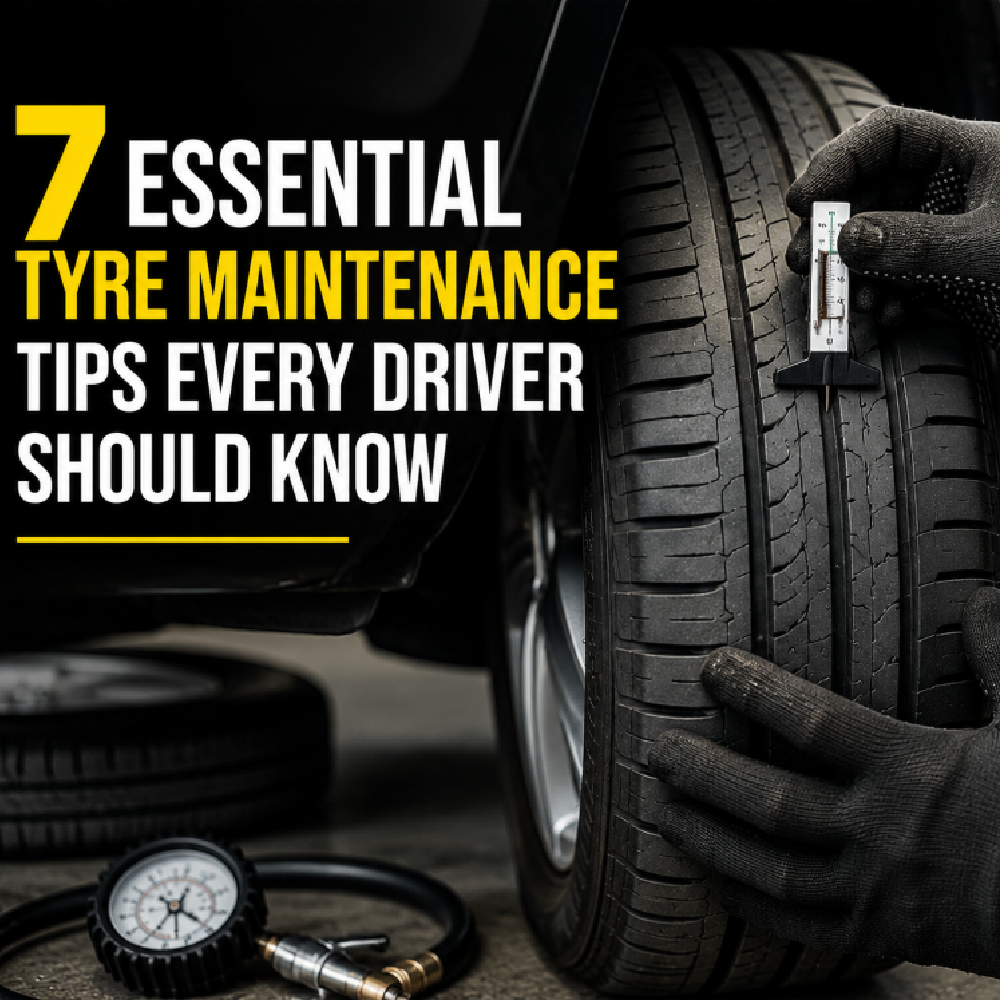
1. Check Your Tyre Pressure Regularly
Maintaining the correct tyre pressure is one of the easiest and most effective ways to improve safety and performance.
Driving with underinflated tyres increases rolling resistance, causing your engine to work harder and consume more fuel. Overinflated tyres, on the other hand, reduce road grip and can lead to uneven tyre wear.
Best Practices:
- Check tyre pressure at least once a month.
- Always check tyres when they’re cold.
- Follow the pressure recommendations in your vehicle owner’s manual or the sticker inside the driver’s door.
- Don’t forget to inspect your spare tyre.
Proper tyre pressure helps improve:
- Fuel efficiency
- Tyre lifespan
- Braking performance
- Vehicle handling
2. Inspect Tyre Tread Depth
Tyre tread provides the grip needed for safe driving, especially in wet weather.
As tyres wear down, they become less effective at dispersing water, increasing the risk of hydroplaning.
In Australia, the legal minimum tread depth is 1.5 mm, but replacing tyres before they reach this limit is recommended for optimal safety.
Watch for:
- Smooth tread
- Uneven wear
- Cracks
- Cuts
- Embedded objects
If your tyres show significant wear, it’s time to consider tyre replacement.
3. Rotate YourTyres
Front and rear tyres wear differently depending on your vehicle’s drivetrain and driving habits.
Regular tyre rotation ensures even wear, extending tyre life and improving handling.
Most experts recommend rotating tyres every 8,000 to 10,000 kilometres, or according to your manufacturer’s recommendations.
Benefits include:
- Longer tyre lifespan
- Better traction
- Smoother ride
- Improved braking
4. Schedule Regular Wheel Alignment
Many drivers overlook wheel alignment until they notice uneven tyre wear or the vehicle pulling to one side.
Poor wheel alignment can quickly shorten tyre life and negatively affect steering control.
Signs you need a wheel alignment:
- Vehicle pulls left or right
- Uneven tyre wear
- Crooked steering wheel
- Vibrations while driving
Professional wheel alignment improves:
- Tyre longevity
- Driving comfort
- Fuel economy
- Steering precision
5. Balance Your Wheels
Wheel balancing ensures your tyres rotate evenly without vibration.
Even a slight imbalance can cause premature tyre wear and reduce driving comfort.
Symptoms of unbalanced wheels include:
- Steering wheel vibration
- Uneven tyre wear
- Increased suspension wear
- Poor handling
Wheel balancing should be performed whenever new tyres are installed or if vibrations occur while driving.
6. InspectTyresfor Damage
Regular visual inspections can help identify problems before they become costly repairs.
Look for:
- Sidewall bulges
- Cracks
- Nails or screws
- Punctures
- Cuts
- Uneven wear patterns
If you notice any damage, have your tyres inspected by a professional immediately.
Ignoring tyre damage can increase the risk of tyre failure, especially at highway speeds.
7. ReplaceTyresBefore They Become Unsafe
No tyre lasts forever.
Most tyres should be replaced every five to six years, depending on driving conditions, mileage, and manufacturer recommendations.
Replace your tyres if you notice:
- Low tread depth
- Sidewall damage
- Frequent punctures
- Excessive vibration
- Age-related cracking
Investing in new tyres improves:
- Road safety
- Wet-weather grip
- Fuel efficiency
- Overall driving performance
Bonus Tips for Better Tyre Care
In addition to the essential maintenance practices above:
- Avoid sudden acceleration and harsh braking.
- Drive carefully over potholes and speed bumps.
- Keep suspension components in good condition.
- Maintain the correct wheel alignment.
- Wash tyres and wheels regularly to remove dirt and brake dust.
- Check tyre pressure before long road trips.
Why Regular Tyre Maintenance Matters
Routine tyre maintenance provides more than just longer-lasting tyres. It helps improve vehicle safety, enhances fuel economy, reduces repair costs, and delivers a smoother driving experience.
By investing a little time in regular tyre inspections and servicing, you can avoid expensive repairs and enjoy greater peace of mind every time you drive.
At Wheel Wize, we provide professional tyre inspections, tyre replacements, wheel alignment, wheel balancing, suspension services, and expert advice to help keep your vehicle in top condition. Whether you’re in Logan City, Yarrabilba, Browns Plains, Crestmead, Marsden, Waterford, Beenleigh, or nearby suburbs, our experienced team is ready to help you stay safe on the road.